 By Claire Whitaker
Updated November 2026
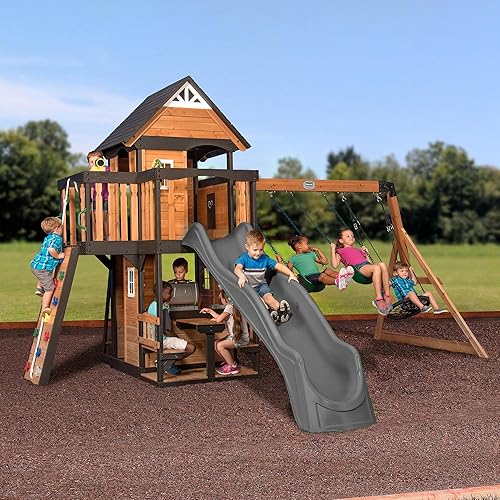
Backyard ideas with playground layouts give kids a place to climb, swing, and run without leaving home. This guide walks you through how to plan a backyard play area, from measuring your space to choosing a safe surface, so you end up with a design that fits your yard and your family. If you are still deciding between a built set and a custom layout, the steps below will help you compare them.
Measure the Space and Set Clear Zones
Start with a rough sketch of your yard, marking the house, fences, trees, utility lines, and any slope. Playground equipment needs more room than most people expect, because the play structure itself is only part of the footprint. Manufacturers typically specify a use zone around equipment, and swings often need extra clearance both front and back so kids can swing without hitting anything.
Shopping for one? See our guide: 5 Best Swing Sets for Playground Options for Backyards (2026).
Divide the area into zones: an active zone for climbing and swinging, a quieter zone for sandboxes or games, and a sitting area for parents. Keeping active equipment away from the back door and the main patio reduces noise and keeps traffic flowing.
Choose Equipment That Matches the Age Range
Toddlers need low platforms, short slides, and bucket swings. Children aged six and older usually handle taller climbing walls, monkey bars, and longer slides. A mixed-age yard works well when you place younger-kid features near the seating area and keep bigger climbing structures farther out.
For a standard wood playset or metal swing set, check the age range in the product literature and match it to your youngest and oldest child. Commercial-grade options such as the Swing Set Commercial Playground Equipment: A Buyer’s Guide for Backyards (2026) outline features that suit heavier daily use.
Plan the Safety Surface and Fall Zones
Surfacing matters more than most design details. Hard surfaces like concrete or packed dirt increase injury risk when a child falls from height. Loose-fill options such as wood chips, shredded rubber, or sand, installed to a depth recommended by the manufacturer, are common choices. Rubber mats and poured-in-place surfaces cost more but stay more level and need less raking.
Extend the surfacing at least six feet in every direction from any platform and swing, and more for taller structures. Keep fences, trees, and retaining walls out of this zone. Our guide on Wood Retaining Wall Ideas for Sloped Backyard: 6 Designs and How to Build Them covers how to handle grade changes near play areas.
Checklist for Installing a Play Area
- Sketch the yard and mark utilities, trees, and slopes.
- Set a use zone of at least six feet around each piece of equipment.
- Confirm the age range and weight limits in the manufacturer’s instructions.
- Choose a surfacing material and calculate the depth needed for the fall height.
- Anchor all structures according to the included hardware instructions.
- Inspect bolts, chains, and wood surfaces every month or two.
Blend the Play Area Into the Rest of the Yard
A playground does not have to look like a playground. Some families use natural wood tones and planted borders so the equipment blends with the garden. Others build a small hardscape area with pavers around the swing set so it doubles as a patio. If your yard is tight, the layouts in Small Backyard Ideas: Getting More From Less Space show how to stack zones without crowding them.
Plant shrubs and hedges along the perimeter for privacy, but keep them trimmed back from the equipment. Shade is worth planning early. A tree, a pergola, or a shade sail over the active zone makes the area usable on hot afternoons.
Common Mistakes to Avoid
- Skipping the use zone and placing swings too close to a fence or shed.
- Using too little surfacing material, which settles and thins over time.
- Installing equipment on uneven ground without leveling it first.
- Buying equipment for older kids and ignoring the needs of toddlers.
- Forgetting to plan drainage, so wood chips wash out after heavy rain.
Recommended Gear
A basic level and a tape measure make the layout and leveling steps far more accurate than eyeballing it. View on Amazon
A soil rake and wheelbarrow help you spread and refresh loose-fill surfacing without straining your back. View on Amazon
A set of galvanized anchor kits helps secure freestanding equipment in soft ground. View on Amazon
FAQ
How much space does a backyard playground need?
Most home play structures need a footprint of roughly 10 by 12 feet, plus a six-foot safety zone around them. Swing sets with multiple swings need more length to allow clearance.
What is the safest surface under a backyard swing set?
Loose-fill materials such as wood chips or shredded rubber, installed to the depth specified by the manufacturer, are common choices. Check local guidance and consult a playground safety professional if you have questions about fall heights.
Can I build a playground on a sloped yard?
Yes, but you will likely need to level a platform for the equipment or use retaining walls to create flat ground. A landscape contractor can advise on drainage and structural safety before you start.
Conclusion
A well-planned backyard play area starts with careful measurement, age-appropriate equipment, and a safety surface that matches the height of the structures. Take time with the layout and the surfacing, and the space will serve your kids for years. Revisit the checklist each season to catch loose hardware or thinning surfacing before it becomes a problem.
Related reading
- Wooden Fence Ideas for Backyard: 7 Styles and How to Choose One
- Wood Retaining Wall Ideas for Sloped Backyard: 6 Designs and How to Build Them
- Wood Fence Ideas for Backyard: 7 Styles and How to Choose One
Ready to choose one?
About Claire Whitaker
Claire Whitaker is part of our editorial team and reviews and edits our backyard living & play guides, checking product details against manufacturer specifications and owner feedback.