 By Claire Whitaker
Updated November 2026
Finding landscape ideas for backyard with hill spaces can feel overwhelming, because a slope changes everything: drainage, access, planting, how much usable flat ground you have, and whether the project is a weekend job or a multi-season build. Reference books are a practical way to see how other designers have solved these problems before you commit to materials. The seven titles below were chosen on specification-style criteria: whether the book covers grading, terracing or retaining structures; how well it addresses regional planting and climate; whether it offers complete plans rather than only inspiration photos; and the general reputation of the publisher and authors, along with patterns in owner feedback about clarity and usefulness.
Our top picks at a glance
- 1
 TOP CHOICEBest overallThe Backyard Landscaper: 40 Professional Designs for Do-It-YourselfersView on Amazon
- 2
 TOP CHOICEBest for regional plantingSoutheast Home Landscaping, Fourth Edition: 54 Landscape Designs withView on Amazon
- 3
 TOP CHOICEBest for stone terracesLandscaping with Stone, Third Edition: Create Patios, Walkways, Walls,View on Amazon
- 4
 Best for northeastern yardsNortheast Home Landscaping, Fourth Edition: 54 Landscape Designs withView on Amazon
- 5
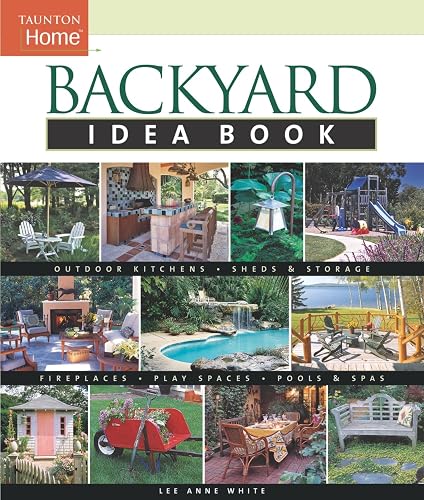 Best for play and pool layoutsBackyard Idea Book: Outdoor Kitchens, Sheds & Storage, Fireplaces, PlaView on Amazon
- 6
 Best for front-to-back planningFront Yard and Backyard Idea BookView on Amazon
- 7
 Best reference for every needEncyclopedia of Landscape Design: Planning, Building, and Planting YouView on Amazon
Our Top Picks
Before you buy any book, it helps to know what a hillside backyard usually needs. Slopes commonly call for a mix of stepped or terraced planting beds, retaining walls at changes in grade, stairs or switchback paths, and drainage that moves water away from the house. Many of the ideas in these books work well on slopes, and you can also read our guide to Landscape Ideas for Sloping Backyard alongside them for a quick overview of common approaches.
Quick Comparison
| Product | Best for | Key feature |
|---|---|---|
| The Backyard Landscaper | General DIY planning | 40 professional-style designs |
| Southeast Home Landscaping, Fourth Edition | Southeastern U.S. yards | 54 designs with 200+ regional plants |
| Landscaping with Stone, Third Edition | Stone terraces and walls | 12 stone projects with planning guidance |
| Northeast Home Landscaping, Fourth Edition | Northeastern U.S. and Canadian yards | 54 designs with regional plant lists |
| Backyard Idea Book | Multi-zone backyard layouts | Play spaces, pools, kitchens and storage ideas |
| Front Yard and Backyard Idea Book | Whole-property planning | Front and back yard concepts in one volume |
| Encyclopedia of Landscape Design | Comprehensive reference | Planning, building and planting in one guide |
The Backyard Landscaper: 40 Professional Designs for Do-It-Yourselfers
The Backyard Landscaper: 40 Professional Designs for Do-It-Yourselfers
Best for: General DIY planning
This book suits homeowners who want a broad set of complete designs they can adapt, including layouts that involve grading and structural features. It is a good starting point if you are not yet sure which slope solution fits your lot.
Key specs
- Forty landscape designs presented for do-it-yourself use
- Focus on professional-style planning and construction methods
Pros
- Wide range of design concepts in one volume
- Practical orientation toward homeowner projects
- Useful for comparing layout options before buying materials
Cons
- Designs are general and may need adjusting for your specific grade and climate
- Regional plant guidance is limited compared with climate-specific titles
Bottom line: A strong first choice for homeowners who want many layout options and plan to adapt them to a sloped site.
Southeast Home Landscaping, Fourth Edition: 54 Landscape Designs with 200+ Plants & Flowers for Your Region
Southeast Home Landscaping, Fourth Edition: 54 Landscape Designs with 200+ Plants & Flowers for Your Region (Creative Homeowner) Plans, Ideas, and Outdoor DIY for AL, FL, GA, MS, NC, SC, and TN
Best for: Regional planting in the Southeast
Written for yards in Alabama, Florida, Georgia, Mississippi, North Carolina, South Carolina and Tennessee, this title is well suited to hillside lots where heavy rainfall, clay soils and erosion are concerns. Its region-specific plant lists help you pick species for slope stabilization.
Key specs
- 54 landscape designs
- More than 200 plants and flowers covered for the region
Pros
- Climate-specific plant selection for Southeastern conditions
- Design plans include planting schedules
- Covers outdoor DIY tasks alongside layout
Cons
- Limited relevance outside the listed states
- Hardscape coverage is lighter than dedicated stone books
Bottom line: The best match for Southeastern homeowners who want plant choices that handle local rain and soil on a slope.
Landscaping with Stone, Third Edition: Create Patios, Walkways, Walls, and Other Landscape Features
Landscaping with Stone, Third Edition: Create Patios, Walkways, Walls, and Other Landscape Features (Creative Homeowner) Learn to Plan, Design, and Work with Natural Stone – 12 Projects
Best for: Stone terraces and retaining walls
If your hill needs level terraces, a dry-stone wall or a stone path, this book focuses on the materials and steps involved. It is especially useful for people who want durable hardscape that will hold up to freeze-thaw cycles and heavy foot traffic.
Key specs
- Twelve stone projects
- Covers patios, walkways, walls and other landscape features
Pros
- Detailed guidance on planning and working with natural stone
- Strong fit for terracing and retaining structures
- Project-based format is easy to follow step by step
Cons
- Stone work is labor-intensive and may be better suited to experienced DIYers
- Little focus on planting or whole-yard design
Bottom line: Pick this one if structural stone features are central to your hillside plan.
Northeast Home Landscaping, Fourth Edition: 54 Landscape Designs with 200+ Plants & Flowers for Your Region
Northeast Home Landscaping, Fourth Edition: 54 Landscape Designs with 200+ Plants & Flowers for Your Region (Creative Homeowner) USA: CT, MA, ME, NH, NY, RI, VT – Canada: NB, NS, ON, PEI, and QC
Best for: Northeastern yards with cold winters
This regional edition covers Connecticut, Massachusetts, Maine, New Hampshire, New York, Rhode Island, Vermont and parts of Canada. Owners in cold climates often value its guidance on plants that tolerate harsh winters and slope conditions.
Key specs
- 54 landscape designs
- More than 200 plants and flowers for Northeastern conditions
Pros
- Regionally appropriate plant selection for cold climates
- Complete design plans with planting details
- Covers outdoor DIY tasks in addition to layout
Cons
- Designs are tied to a specific region
- Limited coverage of heavy hardscape construction
Bottom line: A practical pick for Northeastern homeowners planning plantings and layout on a slope.
Backyard Idea Book: Outdoor Kitchens, Sheds & Storage, Fireplaces, Play Spaces, Pools & Spas
Backyard Idea Book: Outdoor Kitchens, Sheds & Storage, Fireplaces, Play Spaces, Pools & Spas (Taunton Home Idea Books)
Best for: Multi-zone backyard layouts
A sloped yard often needs to be split into zones, such as a lower play area, a mid-level patio and an upper garden. This idea book shows how various functions can be arranged, which helps when you are deciding where a fire pit or pool belongs on uneven ground.
Key specs
- Covers outdoor kitchens, sheds, storage, fireplaces, play spaces, pools and spas
- Photo-driven idea format
Pros
- Helpful for dividing a slope into functional zones
- Good range of features for family backyards
- Visual format makes it quick to browse
Cons
- Idea-focused rather than construction-focused
- Limited planting and grading detail
Bottom line: Ideal for families who want to see how many features can fit into a multi-level yard.
Front Yard and Backyard Idea Book
Front Yard and Backyard Idea Book
Best for: Whole-property planning
If the hill extends from the front of the house around to the back, a book that covers both areas helps keep the design consistent. It works well for matching curb appeal with backyard function on a sloped lot.
Key specs
- Covers both front yard and backyard concepts
- Idea-book format with visual examples
Pros
- Useful for coordinating front and back elevations
- Broad inspiration in a compact format
- Easy to skim for ideas
Cons
- Less depth on engineering and drainage
- Designs may need professional adjustment for steep grades
Bottom line: A good choice for homeowners who want one book covering the whole property.
Encyclopedia of Landscape Design: Planning, Building, and Planting Your Perfect Outdoor Space
Encyclopedia of Landscape Design: Planning, Building, and Planting Your Perfect Outdoor Space
Best for: A comprehensive reference for every stage
This title is aimed at readers who want to go from concept to construction to planting in one place. It suits a hillside project with several phases, where you may need to reference grading, paths and plant choices at different times.
Key specs
- Covers planning, building and planting
- Reference-style, broad-scope format
Pros
- Wide coverage of design principles and techniques
- Useful as a long-term reference during a multi-year project
- Connects layout decisions with planting choices
Cons
- Breadth can mean less depth on any single topic
- Dense for readers who want quick inspiration
Bottom line: Best for planners who want a single comprehensive reference across all phases of a hillside landscape.
Buying Guide
Choosing among these books comes down to a few practical factors. Use the checklist below to match a title to your site.
Match the book to your slope type
A gentle grade calls for different solutions than a steep bank. Look for titles that discuss terracing, retaining walls or switchback paths if your slope is more than a few feet of rise over a short run. Books that only show flat-lot designs will be less useful.
Good picks for this: Landscaping with Stone, The Backyard Landscaper
Check regional planting guidance
Plants that hold a slope in one climate may fail in another. Regional books list species suited to local rainfall, frost dates and soil types, which matters for erosion control on a hill.
Good picks for this: Southeast Home Landscaping, Northeast Home Landscaping
Look for complete plans, not only photos
Inspiration photos are helpful, but plans with dimensions, planting lists and step-by-step sequences save time. Check whether the book includes measured layouts or construction notes.
Good picks for this: Encyclopedia of Landscape Design, The Backyard Landscaper
Consider hardscape detail
Retaining walls, steps and patios on a slope require careful material selection and base preparation. If stone features are a priority, check the depth of construction instructions before buying.
Good picks for this: Landscaping with Stone
Plan for zones and features
Think about how you will use the yard: play, entertaining, gardening or a combination. Idea books that cover multiple functions help you map features onto different levels of the hill.
Good picks for this: Backyard Idea Book, Front Yard and Backyard Idea Book
Think about drainage and erosion
Water is the main enemy of a hillside. Look for guidance on swales, drain lines, and plantings that stabilize soil. Keep in mind that drainage problems near a home’s foundation should be assessed by a licensed landscape architect or civil engineer.
Good picks for this: Encyclopedia of Landscape Design, Southeast Home Landscaping
Assess your skill level and project scope
A book aimed at do-it-yourselfers may include simpler projects, while reference volumes assume more planning experience. Match the depth to the scale of your hill project.
Good picks for this: The Backyard Landscaper, Encyclopedia of Landscape Design
FAQ
What are the best landscape ideas for a backyard with a hill?
Common approaches include terraced planting beds, retaining walls to create flat zones, stepped paths, and dividing the slope into play, seating and garden areas. The right mix depends on how steep the hill is and how you plan to use each level.
Do I need a professional to landscape a sloped backyard?
Small planting beds and low edging are often manageable as DIY projects. Retaining walls over about three feet tall, major grading changes, and drainage work near the house should be evaluated by a licensed landscape architect, civil engineer or qualified contractor.
How do I stop erosion on a hillside yard?
Use deep-rooted plants, ground covers, mulch, and terracing where possible. Directing runoff with swales or drain lines also helps. Local extension offices can recommend species that work in your region.
What plants work best on a slope?
Choose species that are adapted to your climate, have strong root systems, and can handle the moisture level of the slope. Native plants and regional plant lists are a practical starting point.
Are retaining walls safe to build myself?
Low, decorative walls can be built as a DIY project with proper base preparation. Taller walls need engineering, permits in many areas, and attention to drainage behind the wall. Consult a professional for anything structural.
How can I make a steep backyard usable for kids and pets?
Create level zones using terraces, add gentle stairs or ramps, and use soft ground surfaces where play happens. Keep steep banks planted or covered so children and pets stay on stable ground.
Conclusion
For a broad, practical starting point on landscape ideas for backyard with hill sites, The Backyard Landscaper offers many layouts to adapt. If your yard is in the Southeast or Northeast, the regional Home Landscaping editions give climate-specific plant guidance that matters on a slope. Landscaping with Stone is the right choice when terraces and walls are central to the plan, while the Backyard Idea Book and Front Yard and Backyard Idea Book help you zone and coordinate the whole property. The Encyclopedia of Landscape Design suits readers who want one comprehensive reference across every phase of the project.
Sources
- Research-based guidance from university cooperative extension programs on slope stabilization and regional plant selection (extension.org)
- Information on stormwater runoff, erosion control and managing water on residential property (epa.gov)
- Professional standards and resources from the American Society of Landscape Architects on site design and grading
Before you buy: helpful guides
Related reading
- Texas Backyard Landscape Ideas: 7 Designs That Handle Heat and Drought
- Small Sloping Backyard Ideas: 7 Ways to Turn a Hill Into Usable Space
- Small Sloped Backyard Ideas: 7 Ways to Turn a Hill Into Usable Space
- Rock Landscape Ideas Backyard: 6 Best Options for Every Need (2026)
About Claire Whitaker
Claire Whitaker is part of our editorial team and reviews and edits our backyard living & play guides, checking product details against manufacturer specifications and owner feedback.