As an Amazon Associate I earn from qualifying purchases. This page may contain affiliate links.
Good fire pit patio seating turns a bare spot of yard into a place people actually want to linger. The right arrangement puts everyone within easy conversation range of the flames, keeps smoke moving away from guests, and leaves safe walking room around the pit. This guide walks through measuring your space, choosing a seating layout, picking materials, and setting up the area so it works for family evenings and weekend get-togethers alike.
Start With Safety Clearances
Before you think about chairs or cushions, set the boundaries of the fire. Most manufacturers of wood-burning and gas fire pits list minimum distances to combustible materials, and those numbers should override any general rule of thumb. Check the owner’s manual for the specific unit you own or plan to buy, then confirm the requirements with your local fire department or building office, since some municipalities set their own limits on open fires and setbacks from structures, property lines and overhanging trees.
Shopping for one? See our guide: 8 Best Deck Furniture Fire Pit Sets for Backyard Patios (2026).
As a general planning baseline, keep seating at least 10 to 12 feet from the edge of the fire ring, and leave at least 10 feet of clear space around the pit with no furniture, planters or stored items. Overhead, keep branches, pergola slats and string light wiring well above the flame zone. For more on how to build good habits around the fire itself, see Backyard Fire Pit Safety and Better Burning.
Consult your local fire authority before installing a permanent pit or building a patio around one, especially if you plan to use a gas line or a masonry surround.
Measure the Space and Map the Zones
Once you know your clearances, measure the usable area. Note where the sun sets, where the prevailing breeze usually blows, where the door opens onto the yard, and where the nearest walkway runs. Wind direction matters more than most people expect, because smoke that drifts toward seating ruins an evening quickly.
Divide the space into three zones:
- The fire zone: the pit itself plus its clearance ring, usually a circle with a radius of at least 10 feet.
- The seating ring: the band where chairs or benches sit, roughly 10 to 12 feet from the fire.
- The circulation path: at least 3 feet wide, so guests can walk to the house, the grill or the restroom without cutting through the seating or stepping near the flames.
If you are still deciding on the overall footprint, How to Plan a Backyard Patio: Size, Site and Surface covers how to pick dimensions and a site that drains well.
Choose a Seating Layout
The layout determines how people talk to each other, so it matters as much as the furniture. Here are seven arrangements that work well around a fire pit, with notes on when each one fits best.
- Full circle: Chairs evenly spaced around the pit. Best for small pits and groups of four to eight, since everyone sees everyone else.
- Semi-circle facing a view: Seating on one side, with the open side facing a garden, pool or sunset. Good for yards with a strong focal point.
- Two facing benches: Long benches on opposite sides of the pit. Efficient for larger groups and easy to add cushions to.
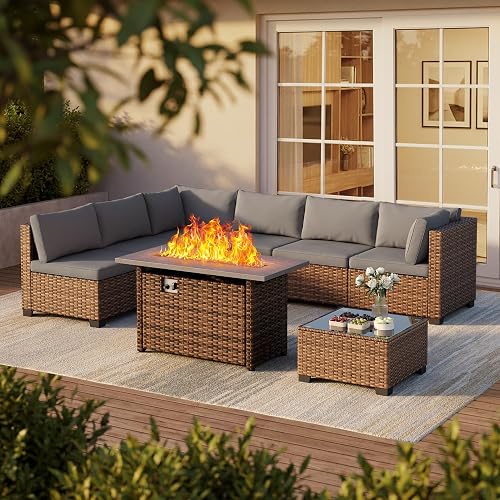
- Lounge cluster: Two or three deep chairs and a low table set at angles to the fire. Relaxed and conversational, though it takes more floor area.
- Bench wall: A curved or built-in bench that wraps part of the pit. Stable, low maintenance and great for kids who want to sit close to the group.
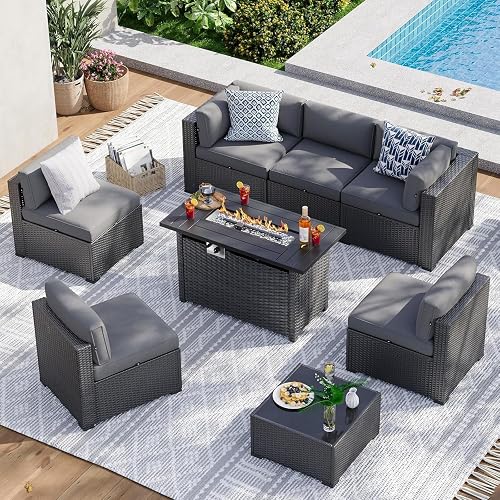
- Staggered mixed seating: A combination of chairs, a loveseat and a stool or two. Useful when you want flexibility for different group sizes.
- Corner nook: Seating tucked against a fence or wall with the pit in front. Works well in small yards, but check that the wall or fence sits outside your clearance distance.
Spacing Between Chairs
Leave about 30 to 36 inches between the edges of adjacent chairs so people can pull them out and move without bumping each other. Keep the center of each chair about 3 feet from the next one for comfortable conversation distance. Around a standard 36-inch pit, a ring of six to eight chairs usually fits well inside a 20-foot seating circle.
Pick Materials That Handle Heat, Sun and Weather
Materials make or break outdoor seating near a fire. Heat from a pit can warm nearby surfaces, and sparks can land on fabrics. Choose items that tolerate both sun and occasional ash.
| Material | Strengths | Things to watch |
|---|---|---|
| Powder-coated aluminum | Light, rust resistant, easy to move | Can get warm in direct sun; cushions needed for comfort |
| Teak or acacia wood | Natural look, sturdy, weathers to silver | Requires periodic oiling or sealing |
| Resin wicker | Comfortable, weather resistant, low upkeep | Check woven fibers for sparks and ash buildup |
| Concrete or stone bench | Permanent, fire-resistant, long lasting | Cold to sit on without cushions; heavy to relocate |
| Cast iron | Heavy, stable, classic appearance | Gets hot in sun; can rust if not maintained |
For guidance on keeping each material in good shape, see Patio Furniture Care by Material: Metal, Resin, Wood, Wicker.
Cushions and Fabrics
Choose outdoor-rated cushions with quick-dry foam and solution-dyed acrylic or polyester covers. Avoid loose cotton throws and lightweight synthetics near the flames, and keep blankets within reach but off the chairs when the fire is burning. Store cushions indoors when the pit is not in use, especially in damp or windy weather.
Lay Out the Surface and Drainage
A solid, level surface keeps chairs from wobbling and protects the area from ash stains and standing water. Pavers, flagstone, poured concrete and compacted gravel with edging are all common choices. Gravel is inexpensive to start with but can shift under heavy chairs, so set chairs on pavers or a stable base if you plan to use gravel. Make sure the surface slopes slightly away from the house to shed rainwater. More detail on base preparation and drainage is in Backyard Patio Materials, Drainage and Care.
If you are building a new patio, Concrete Patio Ideas for Backyard: 7 Styles and How to Build Them shows several finishes that suit a fire pit area.
Step-by-Step Setup Process
- Confirm local rules and the pit manufacturer’s clearance requirements.
- Mark the fire zone, seating ring and circulation path with stakes and string or a garden hose.
- Check wind direction at different times of day and adjust seating so smoke drifts away.
- Prepare the base: remove sod, level the ground, add compacted base material if needed, and install edging.
- Lay the surface material, keeping the pit on a noncombustible base such as pavers or a fire-rated ring.
- Place the pit first, then arrange seating around it, testing chair spacing by sitting in each position.
- Add lighting, side tables and storage at the edges of the seating ring, not inside the clearance zone.
- Sweep the area after each use and check the surface for scorch marks or loose pavers.
Tools and Supplies Checklist
- Measuring tape and stakes or marking paint
- Level and string line
- Shovel, rake and plate compactor or hand tamper
- Edging material and landscape spikes
- Paver or stone material, sand and polymeric jointing sand
- Fire extinguisher or water source and a fire-safe shovel
- Outdoor-rated cushions and covers
Common Mistakes
- Placing chairs too close to the pit. People get uncomfortable with heat and sparks, and the clearance may violate local rules.
- Ignoring wind. A layout that looks perfect on paper can fill with smoke within minutes if it faces the wrong way.
- Using combustible decor near the flames. Dried wreaths, paper lanterns and dry mulch are common fire starters.
- Skipping drainage. Standing water softens bases, causes chairs to sink and makes the area slippery.
- Crowding the circulation path. Narrow walkways cause guests to cut through the seating zone, which raises the risk of accidents.
- Leaving the pit unattended. Always extinguish the fire fully and keep water or sand nearby.
Tips for a Comfortable, Long-Lasting Setup
- Use low side tables within reach of every seat to hold drinks and snacks off the ground.
- Add a rug made from outdoor-rated, flame-resistant material only outside the fire zone.
- Choose chairs with high backs and slightly reclined angles for longer evenings.
- Plan lighting on a separate circuit or solar source so it can stay on after the fire goes out.
- Rotate cushions and check furniture joints at the start of each season.
Recommended gear
A few products can make fire pit seating easier to set up and maintain. Look for items rated for outdoor use and check manufacturer specifications before buying.
- Fire pit cover: A fitted, weather-resistant cover keeps rain and debris out of the pit between uses, which protects both the finish and the burn area. View on Amazon
- Fire-resistant outdoor rug: A rug rated for outdoor use can define the seating area and protect the surface from drips, but it should always sit outside the fire zone. View on Amazon
- Fire-safe tool set: A long-handled poker and shovel let you tend the fire without leaning over the flames. View on Amazon
- Outdoor cushion set: Quick-dry cushions improve comfort on hard seats and are easy to store when not in use. View on Amazon
FAQ
How far should patio seating be from a fire pit?
Most planning guides recommend at least 10 to 12 feet between the fire and the nearest seat, but the manufacturer’s specifications and local fire codes take priority. Always confirm the exact requirement for your pit.
What is the best shape for fire pit seating?
A circle or semi-circle works well for most yards because it keeps everyone facing the fire and within easy conversation distance. Long benches on two sides suit larger groups.
Can I use wood furniture around a fire pit?
Wood can work if it is sealed or treated and placed well outside the heat zone. Hardwoods like teak hold up better than softer woods, but any wood can scorch or ignite if sparks land on it, so keep it at a safe distance.
What surface is best under a fire pit and seating?
Pavers, flagstone or poured concrete are the most stable choices. Gravel works if it is contained by edging and set on a firm base. Avoid bare grass or mulch directly under the pit.
How do I keep smoke away from seating?
Observe the prevailing wind at different times of day and orient seating so smoke drifts away from the group. Smokeless or low-smoke pits can also help, and you can adjust the position of chairs as needed during the evening.
Do I need a permit for a fire pit and patio seating?
It depends on your location. Many areas regulate open fires and some require permits for permanent installations or gas lines. Check with your local fire department or building office before you build.
How do I maintain outdoor cushions used near a fire?
Brush off ash, keep cushions dry, and store them indoors during storms or long periods of disuse. Check covers for scorch marks and replace any that show damage.
Conclusion
Good fire pit patio seating starts with safe clearances, then builds outward to comfortable layouts, suitable materials and a stable surface. Map your zones, test the wind, and choose a seating arrangement that suits your group size. With those basics in place, your backyard fire pit area can handle everything from quiet weeknight fires to larger weekend gatherings.