 By Claire Whitaker
Updated November 2026
Backyard hillside landscape ideas help you turn a slope from a mowing headache into usable, attractive space. This guide walks through how to assess your hill, choose a structure that fits, and add planting and play areas that hold soil and stay safe. You will finish with a clear plan you can phase in over time.
Assess the Slope Before You Design
Start by measuring the grade. Stand at the bottom of the slope, have someone hold a level or straight board at the top, and measure the rise over a 10-foot run. A slope under about 10 percent is easy to terrace or plant, while anything steeper usually needs retaining walls or engineered steps. Note where water collects after rain, where the sun hits, and where soil is thin or rocky. Those observations will shape nearly every decision that follows.
Shopping for one? See our guide: 5 Best Backyard Playsets for Small Yards: Compact Picks for Families.
Build Level Zones With Terraces and Retaining Walls
Terracing is the most effective way to create flat areas on a hillside. Each level gives you room for seating, planting beds, or play, and the walls hold back soil that would otherwise wash out. Keep walls under 3 feet tall where possible, since taller walls generally need engineering and permits. Check your local building code and consult a licensed landscape engineer or contractor before building any wall that retains significant soil or sits near a structure.
If you are comparing materials, our guide to Wood Retaining Wall Ideas for Sloped Backyard: 6 Designs and How to Build Them covers timber options in more detail.
Plant for Stability and Low Maintenance
Plants do much of the holding work on a slope, so choose species with deep or spreading roots. Ground covers, native grasses, and shrubs with fibrous root systems slow erosion better than a lawn, which often needs regular mowing on steep ground. Group plants by water needs and sun exposure, and mulch bare soil to a depth of 2 to 3 inches while new plantings establish. Owners often report that a layered mix of groundcover, shrubs, and a few small trees looks fuller and requires less upkeep than a single-plant approach.
For more planting ideas suited to tough grades, see Sloping Backyard Landscape Ideas: 7 Ways to Tame a Hillside. If your yard is also hot and dry, Low Maintenance Backyard Landscape Ideas: 6 Easy Layouts for Busy Families offers layouts that reduce watering and mowing.
Add Paths, Steps, and Safe Play Areas
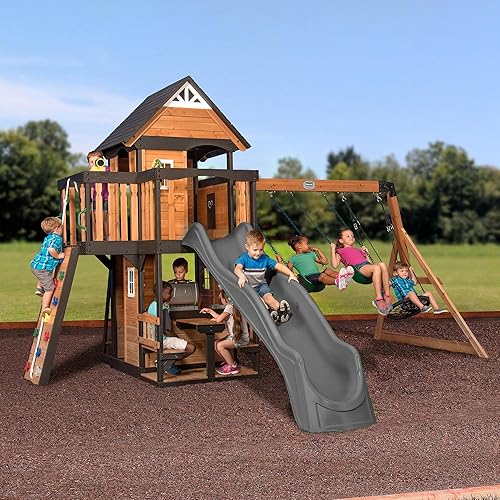
Steps and switchback paths make a slope usable every day. Aim for risers of about 6 to 7 inches and treads of at least 12 inches, and add handrails on any section that feels steep. Use textured surfaces such as stone or compacted gravel with edging so feet stay secure when wet. If children use the hill, place play equipment on the flattest terrace and keep a clear, level fall zone around it. Check manufacturer instructions for required fall-zone depth and anchoring.
Create Focal Points and Seating
A flat terrace near the top or middle of the slope makes an excellent spot for a fire pit, bench, or small patio. Keep the seating area at least 10 feet from any structure and check local rules on open flames. Lighting along the steps and walls improves safety after dark, and our article Backyard Landscape Lighting Ideas: 7 Ways to Light Your Yard Safely explains how to place fixtures without glare.
Planning Checklist
- Measure the slope grade and note sun, shade, and drainage patterns.
- Decide how many usable levels you need and where each will sit.
- Check local codes and permit requirements for walls over 3 feet.
- Choose root-strong plants grouped by water and light needs.
- Plan steps, handrails, and a fall zone for any play equipment.
- Phase the work, starting with drainage and the lowest wall.
Common Mistakes to Avoid
- Skipping drainage. Water pooling behind a wall can cause it to fail.
- Planting only annuals, which offer little soil protection through the year.
- Building walls too tall without engineering input.
- Placing play equipment on an unlevel or sloped surface.
- Forgetting mulch on new beds, which lets rain wash soil downhill.
Recommended Gear
- Landscape fabric for erosion control: placed under mulch and stone, it helps keep soil from migrating through gaps. View on Amazon
- Hand tamper: useful for compacting base material under steps and pavers so they do not settle. View on Amazon
- Four-foot level: essential for checking grade and keeping terrace walls plumb. View on Amazon
FAQ
How steep is too steep for a backyard lawn?
Many landscapers suggest that slopes steeper than about 3:1, roughly a 33 percent grade, are hard to mow safely. Steeper areas often do better with ground cover or planted beds.
Do I need a permit to build a retaining wall?
It depends on your location and wall height. Many areas require permits for walls over about 3 to 4 feet, so check with your local building department before starting.
What is the cheapest way to stop hillside erosion?
Mulch, groundcover, and erosion-control fabric are generally the most accessible first steps. For persistent washouts or large grades, consult a licensed landscape professional or engineer.
Conclusion
A sloped yard can become one of the most distinctive parts of your property with the right plan. Measure first, build level zones with sound walls, and plant for stability. Phase the project so each step is manageable, and consult professionals for anything structural.
Ready to choose one?
About Claire Whitaker
Claire Whitaker is part of our editorial team and reviews and edits our backyard living & play guides, checking product details against manufacturer specifications and owner feedback.