 By Graham Fisher
Updated November 2026
Replacement swing set parts can bring a worn playset back to safe, usable condition without buying a whole new structure. This guide walks you through identifying your set, finding the correct replacement parts for swing set hardware, and installing them so they hold up under active kids. You will also learn which components wear out first and when a part is no longer worth repairing.
Why Replacement Swing Set Parts Wear Out
Most swing sets fail in predictable places. Swing hangers and S-hooks take repeated bending stress, chains and hangers rust or stretch, and wood posts rot where they meet the ground. Plastic seats crack after years of UV exposure, and bolts loosen as the frame flexes with each push. Knowing where the wear usually starts helps you decide what to replace first.
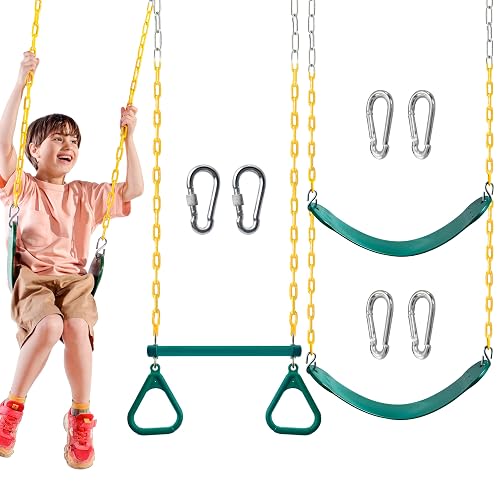
Shopping for one? See our guide: 5 Best Parts of a Swing Sets (2026): Our Picks.
Regular inspection is the best early warning. A quick look every few weeks catches cracked plastic, bent hardware and loose connections before they become a fall risk.
Step 1: Identify Your Swing Set Brand and Model
Before you shop for replacement parts for swing set frames, you need the exact manufacturer and model. Many parts are not interchangeable between brands, and even two sets from the same company can use different hole spacing, tube diameters or hanger styles.
Where to Find the Model Information
- Check the instruction manual, which usually lists the model number on the first or last page.
- Look for a label or stamped plate on a leg bracket, crossbar or the top of a support post.
- Search your original order confirmation or packing slip for the product name and SKU.
- Measure the tube diameter and note the color and hardware type if no paperwork remains.
If you still cannot identify the set, photograph the frame from several angles and contact the manufacturer’s customer service with those photos. Many companies keep archived parts lists.
Step 2: Inventory and Measure the Parts You Need
Once you know the model, list every component that is damaged or missing. Do not replace parts that still work, but do check whether a worn part is putting stress on a neighboring one. A bent swing hanger, for example, can wear out a chain link quickly.
Common Components to Check
| Component | What to Look For | Replace If |
|---|---|---|
| Swing seats | Cracks, sharp edges, UV fading | Cracks reach the mounting holes or edges are sharp |
| Chains | Rust, stretched links, kinks | Links are stretched, bent or heavily corroded |
| S-hooks and carabiners | Bending, gaps in closure | Hook does not close fully or is opened or deformed |
| Top bar or hanger brackets | Cracks, elongated holes | Metal is cracked or holes have worn oval |
| Ground stakes and anchors | Loosening, rust, bending | Stake no longer holds the leg firmly |
| Wood posts or beams | Rot, splitting, soft spots | Structural wood is soft when pressed with a screwdriver |
Measure tube diameters with calipers or a tape. Note bolt sizes and thread pitch as well. Most residential sets use metal tubing from roughly 1 to 2 inches in diameter, but exact sizes vary by brand, so measure rather than guess.
Step 3: Choose the Right Source for Replacement Parts
There are three main routes for finding replacement parts for swing set frames, and each has trade-offs.
- Manufacturer parts department. This gives you exact-fit components. Have your model number and a clear photo ready, since many companies sell parts directly.
- Universal hardware. Standard S-hooks, quick links, bolts and carabiners are widely sold. These work well for chains and hardware but not for proprietary brackets.
- Third-party or aftermarket parts. These can fill gaps for discontinued models. Verify the dimensions and the load rating before installing.
Whatever you choose, match the material. Galvanized steel or stainless hardware resists rust better than plain steel, which matters a lot in wet climates.
Checking Load and Safety Ratings
Swing components carry dynamic loads, meaning the force increases when a child swings hard. Look for hardware labeled with a working load limit and avoid substituting a lighter-duty hook or chain than the original. If a manufacturer specifies a particular strength, do not go below it.
Step 4: Prepare the Area and Tools
Good preparation prevents dropped hardware and rushed mistakes. Plan for about an hour for a simple swing replacement, longer if you need to re-level legs or replace a top beam.
Tools and Supplies Checklist
- Adjustable wrench and socket set matched to your bolt sizes
- Rubber mallet for seating stakes and tube connectors
- Tape measure and level
- Marine-grade or galvanized hardware matching the original size
- Penetrating lubricant for stuck bolts
- Work gloves and safety glasses
- Bucket to keep fasteners together
- A helper for lifting the top beam
Remove the swings from the frame before any structural work. Lay out the new parts and check that each one matches the old version in size and style.
Step 5: Install Replacement Swing Hardware
Installation order matters. Work from the top of the swing structure downward when replacing hangers, and check each connection before moving on.
Swing Hanger and Chain Replacement
- Unhook the old chain or hanger from the top bar. Note how the old chain was attached, including any swivels.
- Attach the new swivel or hanger to the top bar first.
- Thread the chain through and close each link fully. Avoid leaving any link open.
- Connect the seat, making sure the chain hangs straight without twisting.
- Test the swing with gentle force before letting a child use it.
Securing Legs and Anchors
If you replace ground stakes or anchors, drive the new stake in at the angle the manufacturer specifies, usually to the depth of the original hole. Tighten all leg connections and recheck them after a week of use, since new hardware can settle.
Replacing Wood Components
For rotted posts, a full replacement is safer than patching. Use pressure-treated lumber rated for ground contact if the post sits in soil. Keep the new post plumb and check that it lines up with the existing frame before fastening.
Step 6: Test, Adjust and Maintain
After installation, load test each swing by having an adult sit on it and push gently, then increase the force. Check every bolt, hook and chain link. Look for movement at joints, unusual creaks and any sign that the frame lifts on one side.
Schedule a recurring check. Tighten bolts seasonally, rinse off salt or grime, and apply a light lubricant to swivels. Replace any part that shows new cracks or deformation rather than waiting for failure.
Common Mistakes to Avoid
- Mixing brands. Hardware that looks similar may have different hole sizes, causing loose or unsafe connections.
- Using undersized hooks or chains. A lighter component can fail under the forces of a swinging child.
- Ignoring rust. Surface rust on a chain may be fine, but flaking or pitting means the link has lost strength.
- Skipping the test. A new part can still be misaligned. Always test before allowing use.
- Replacing only the visible part. A cracked seat often means the chain or hanger has been overloaded too.
- Leaving frames unanchored. Loose stakes let the set rock, which speeds up wear on every joint.
Tips for Longer-Lasting Replacement Parts
- Buy one spare set of hangers and S-hooks so repairs are quick.
- Choose stainless or heavy galvanized hardware in humid or coastal areas.
- Keep the seat height consistent so children do not swing with uneven load on one chain.
- Store swing seats out of direct sun during off-seasons to slow plastic fading.
- Check the surrounding fall zone after any repair, since shifted frames can change the safe area.
Recommended gear
A few supplies make replacement work easier and safer. Start with the basics.
- Galvanized swing hangers and chain sets help you match rust resistance and load capacity to the original hardware. View on Amazon
- Stainless steel quick links give you a fast, tool-free way to reconnect chains without opening the link by hand. View on Amazon
- Penetrating lubricant frees seized bolts and reduces squeaks at swivels. View on Amazon
- A combination socket set covers the metric and standard bolt sizes most playsets use. View on Amazon
FAQ
Can I use universal hardware for replacement swing set parts?
You can use universal S-hooks, quick links and bolts for chains and hangers if the size and load rating match the original. Proprietary brackets and tube connectors usually require parts from the original manufacturer.
How do I know if a swing chain needs replacing?
Replace a chain if links are stretched, bent, cracked, or heavily rusted. Surface rust alone is less serious, but flaking or pitting means the metal has lost strength.
Where do I find the model number of my swing set?
Check the instruction manual, a label on a leg or crossbar, or your original order record. If none of these are available, contact the manufacturer with photos of the frame.
Are third-party replacement parts safe?
They can be, but only if the dimensions match and the load rating meets or exceeds the original. Verify the specifications before installing and avoid parts with no rating information.
How often should I inspect swing set hardware?
Inspect every few weeks during regular use and after severe weather. Tighten bolts seasonally and replace worn components promptly rather than waiting for a failure.
Can I replace a rotted wood post myself?
Many homeowners can, but structural work involves weight and alignment risks. If the frame is heavy or the post supports the top beam, consider asking a professional or an experienced contractor for help.
When should I replace the whole swing set instead of parts?
Consider full replacement when the main frame is cracked, the wood is structurally soft throughout, or the manufacturer no longer supplies parts and the set does not meet current safety expectations.
Do I need to follow the manufacturer’s installation instructions?
Yes. Manufacturer instructions specify torque, anchor depth and component order. Following them is the simplest way to keep your repaired set safe and within its design limits.
Conclusion
Replacing worn components is often the most practical way to keep a swing set safe and usable. Identify the exact model, inventory what needs attention, and source parts that match in size, material and load rating. Install carefully, test thoroughly, and schedule regular checks so small problems do not become hazards. For broader setup and maintenance guidance, see our related guides on this site.
Related reading
- Wooden Porch Swing Set: A Step-by-Step Guide to Choosing and Setting One Up
- Backyard Discovery Skyfort II Cedar Swing Set Playset Review (2026)
- Backyard Discovery Grayson Peak Cedar Swing Set/Playset: Setup and Buyer's Guide
- 7 Best Accessories for Swing Set Picks for Backyard Play (2026)
- 5 Best Swing Sets for Playground Options for Backyards (2026)
Ready to choose one?
About Graham Fisher
Graham Fisher is part of our editorial team and reviews and edits our backyard living & play guides, checking product details against manufacturer specifications and owner feedback.