 By Graham Fisher
Updated November 2026
A swing set and chain setup is only as safe as the links that hold each seat. In this guide you will learn how to pick the right chain for swing set hardware, measure it correctly, attach it without creating pinch points, and inspect it so it stays sound season after season. Most of the work takes an afternoon, and the checks take a few minutes each month.
Why the Chain Matters More Than It Looks
Swing chains carry the full weight of a child, and they flex, twist and rub against hardware every time someone pumps their legs. Chain is also the part of a swing set that most often fails from neglect. Rust weakens links gradually, and a link that looks fine from the ground can crack under a sudden jolt. Treating the chain as a safety component, not an afterthought, is the foundation of everything that follows.
Shopping for one? See our guide: Backyard Discovery Skyfort II Cedar Swing Set Playset Review (2026).
Manufacturers of residential swing sets generally specify galvanized or coated steel chain for outdoor use, and most instructions call for chain that is rated for the expected load with a comfortable safety margin. Always check the manual that came with your set, because replacement chain must match the original gauge and rating.
Step 1: Check What Your Swing Set Requires
Before buying anything, confirm what hardware your frame uses. Many residential sets use a short length of chain on each seat, attached to a top swivel or a steel S-hook. Others use rope or coated chain with a plastic sheath. Mixing components from different manufacturers is a common source of mismatched fittings.
- Look for the model number on the top bar or the instruction sticker.
- Note the link size and wire thickness if you can measure them with calipers or a ruler.
- Record the number of swings, because chain length depends on each seat’s attachment point.
- Keep the original manual or download the manufacturer’s parts list.
Step 2: Measure for the Correct Chain Length
Chain length determines seat height, and seat height determines safety. A swing seat should sit roughly 12 to 14 inches off the ground at rest for toddler seats and somewhat higher for big-kid seats, so that a child can sit down and push off without the seat dragging through wood chips or dirt. Too long a chain creates a hazard because feet can strike the ground at the top of the arc, and too short a chain can cause the seat to swing into the frame.
Measuring Method
- Hang the top swivel or hook from the top bar, and let the seat rest in its normal position.
- Measure from the bottom of the top attachment to the seat’s hanging point.
- Subtract the seat’s own height at the hanging point, then measure the ground clearance you want.
- Cut or add links until the seat hangs at your target height when the swing is still.
Always leave the ground clearance requirement in mind for the child who will use each seat. Toddler and adult seats should never share the same chain length on a single frame unless the manufacturer says so.
Chain Length Reference
| Seat type | Typical resting seat height | What to check |
|---|---|---|
| Toddler bucket | About 12 to 14 inches | Seat should not touch loose mulch when swinging |
| Standard belt seat | About 14 to 16 inches | Feet clear the ground at the top of the arc |
| Adult or tire seat | Follow the manufacturer’s spec | Adult weight rating and frame clearance |
These ranges are general guidelines. Your frame’s instructions override them.
Step 3: Choose the Right Chain Type
When shopping for a chain for swing set replacement, compare these features:
- Material: Galvanized steel resists rust far better than plain steel. Stainless steel is a premium option for coastal or humid climates.
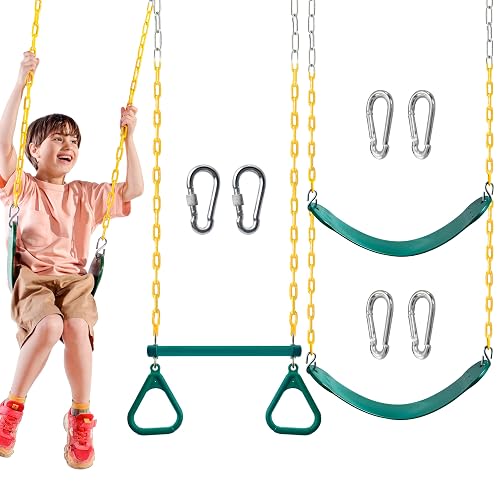
- Coating: A vinyl or nylon sheath protects pinching points and reduces wear on the child’s hands. Many owners prefer coated chain for younger children.
- Link size: The links must fit the swivels and hooks on your frame without forcing them open.
- Working load: Choose a chain rated well above the heaviest user, and confirm the rating with the manufacturer.
Avoid decorative or lightweight chain sold for crafts or jewelry. It may look similar but lacks the strength rating a swing requires.
Coated vs. Uncoated Chain
Coated chain pinches less and feels softer in small hands, which helps when children grip the links tightly. Uncoated galvanized chain is simpler to inspect because you can see every link clearly, and rust usually appears sooner on the surface. Many owners use coated chain on the lower section near the seat and uncoated or fully galvanized chain at the top, where links are easier to check. Either approach works if you keep up with inspections.
Step 4: Attach the Chain Safely
Attachment points are where most problems start. Follow this sequence for a clean, secure hang:
- Remove the old chain completely and clean the swivel and hook with a wire brush.
- Inspect the top bar and swivel for rust, cracks or bent parts before attaching anything new.
- Open each link by twisting it sideways rather than pulling it apart, which keeps the link round.
- Thread the link through the swivel or hook, then close it fully so the ends meet with no gap.
- Connect the seat last, and confirm that each link sits flat, not twisted.
- Let the swing hang freely for a few minutes, then recheck every connection.
If your frame uses an S-hook, close it with pliers so the tip cannot slip out of the link. Some owners add a stainless steel snap or a locking carabiner, but only use hardware rated for the same load as the chain, and only if the manufacturer allows it.
Tools and Supplies Checklist
- Replacement chain matched to your frame’s rating
- Two pairs of pliers, one with a smooth jaw
- Wire brush and fine sandpaper for rust spots
- Measuring tape
- Penetrating lubricant for stiff swivels
- Gloves for handling sharp edges
- Marker or zip tie to note the installation date
Step 5: Inspect and Maintain the Chain
A chain needs a visual check at least once a month during heavy use and before every season. Look for these warning signs:
- Links that have stretched, elongated or become oval
- Flaking rust, especially where the link touches another link or the swivel
- Cracks or hairline splits in the metal or the coating
- Coating that is torn, sticky or peeling, exposing bare metal
- Twisted links or seats that hang at an angle
- Loose hooks or swivels that wobble when pushed
Replace any chain that shows cracks, deep pitting or obvious stretching. Surface rust can often be brushed off and treated, but once a link loses cross-section it should be replaced. If a child has been injured or the swing has been hit hard, have the frame and chain professionally inspected before further use.
Common Mistakes to Avoid
- Buying chain by appearance alone and ignoring the rating
- Mixing chain from different brands, which can cause uneven link sizes
- Hanging the seat too low, so feet strike the ground at the top of the arc
- Leaving a seat hanging at a different height than its partner on the same frame
- Ignoring rust because the chain still looks usable
- Painting over rusted chain instead of replacing damaged links
- Using rope or wire as a quick fix for a broken chain
- Forgetting to recheck after the first few weeks of use, when links settle
Tips for Longer Chain Life
- Wipe chain down with a dry cloth after rain or sprinklers, especially at the top links.
- Store seats indoors during long winters if your frame allows it, or at least cover the top swivels.
- Teach children to hold the chain and not wrap it around their hands or neck.
- Keep the swing area clear of wet mulch and loose gravel that can trap moisture against metal.
- Log inspection dates so you know when each component was last checked.
Recommended gear
A few supplies make chain replacement and upkeep much easier. Choose items that match your frame’s size and rating.
- Galvanized swing chain: Galvanized coating slows rust on exposed links, which matters most for outdoor frames that stay wet. View on Amazon
- Vinyl-coated swing chain: A protective sheath reduces pinching and softens the grip for younger children. View on Amazon
- Locking pliers: A locking tool keeps S-hooks and links closed firmly during installation. View on Amazon
- Wire brush set: Clearing rust from swivels and hooks before reattaching chain helps prevent early wear. View on Amazon
FAQ
How often should I replace swing set chain?
There is no fixed schedule. Replace chain when you see stretched links, cracks, deep rust or damaged coating. Heavily used outdoor swings in wet climates may need attention every few years, while sheltered sets can last much longer.
Can I use rope instead of chain on a swing?
Only if your frame’s manufacturer approves rope for that seat. Rope and chain are rated differently, and rope can fray, stretch or rot. Do not substitute one for the other unless the instructions allow it.
What seat height is safest for a swing set?
Many toddler seats are set around 12 to 14 inches off the ground at rest, while older children’s seats sit a bit higher. Always follow the frame manual, and make sure feet clear the ground at the top of each arc.
Is stainless steel chain better than galvanized?
Stainless steel resists corrosion more thoroughly, which helps in salt-air or high-humidity areas. Galvanized chain is a sound, budget-friendly choice for most backyards when it is inspected regularly and replaced when damaged.
How do I know if the chain is rated for my child’s weight?
Check the working load rating printed on the chain packaging or listed by the manufacturer, and compare it to the heaviest user plus a comfortable margin. If the rating is not clearly stated, ask the seller or manufacturer before installing it. Consult a professional if you are unsure.
Can I clean rusted swing chain?
Light surface rust can be brushed off with a wire brush and sealed with a rust-inhibiting coating. Deep pitting, flaking or thinning links should be replaced, because cleaning will not restore lost strength.
Should I hang swings at the same height?
Yes, for seats of the same type. Uneven heights can cause swings to collide, and they can make one seat sit lower than the rest, creating a trip or strike hazard.
What should I do after a swing has been hit hard or dropped?
Stop using the swing until you have inspected every link, swivel, hook and the top bar. Any bent, cracked or deformed part should be replaced. If you are not confident in your inspection, consult a qualified installer or the manufacturer.
Conclusion
A safe swing set and chain setup comes down to three things: matching the chain to your frame’s rating, hanging each seat at the correct height, and checking the links regularly. Start with the manual, measure carefully, and replace any chain that shows wear instead of trying to patch it. With a little routine maintenance, your swings will stay sturdy for years of play.
Related reading
- Wooden Porch Swing Set: A Step-by-Step Guide to Choosing and Setting One Up
- Backyard Discovery Grayson Peak Cedar Swing Set/Playset: Setup and Buyer's Guide
- 5 Best Swing Sets for Playground Options for Backyards (2026)
- 5 Best Metal Swing Set Swings for Kids and Backyards (2026)
- 4 Best Outdoor Swing Sets with Canopy for Backyard Play (2026)
- Patio Set with Fire Pit Table: 7 Best Picks for Backyards (2026)
Ready to choose one?
About Graham Fisher
Graham Fisher is part of our editorial team and reviews and edits our backyard living & play guides, checking product details against manufacturer specifications and owner feedback.